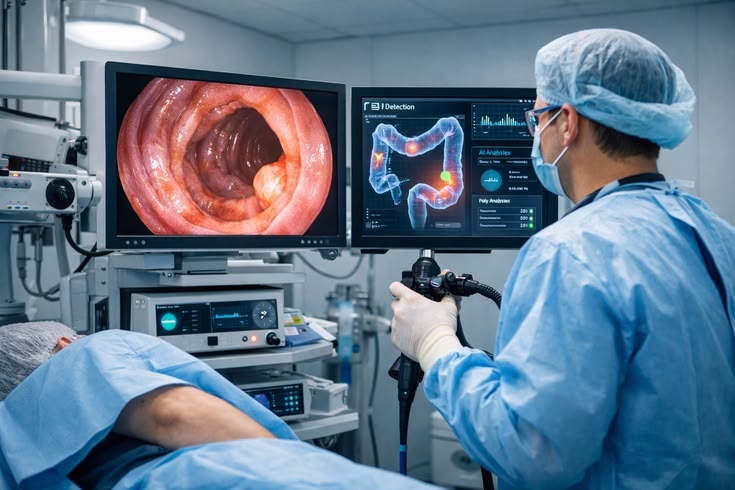


Colonoscopy
Colonoscopy is a safe and highly effective endoscopic procedure that allows physicians to examine the inner lining of the colon and rectum using a thin, flexible tube equipped with a high-definition camera. It is considered the gold standard for the early detection and prevention of colorectal diseases, enabling the identification of inflammation, ulcers, bleeding, polyps, and colorectal cancer. During the same procedure, suspicious tissue can be biopsied, and most precancerous polyps can be removed, reducing the risk of developing colorectal cancer.
Colonoscopy is recommended for individuals experiencing symptoms such as persistent abdominal pain, rectal bleeding, unexplained changes in bowel habits, chronic diarrhea or constipation, iron-deficiency anemia, or unexplained weight loss. It is also widely used as a screening examination for colorectal cancer, with current international guidelines recommending routine screening for average-risk adults beginning at age 45. Early diagnosis through colonoscopy significantly improves treatment outcomes and plays a vital role in preventing colorectal cancer before it develops.